Company News
Nov. 18, 2026
Woven wire mesh and welded wire mesh are both manufactured from metal wire, but they create very different visual and functional characteristics when used in architecture.
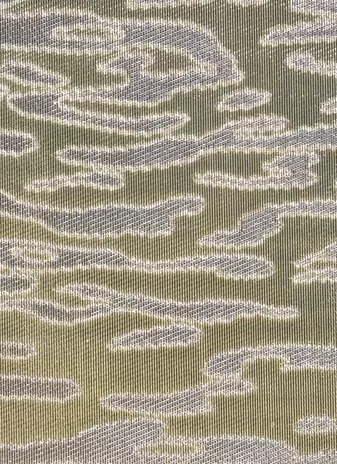
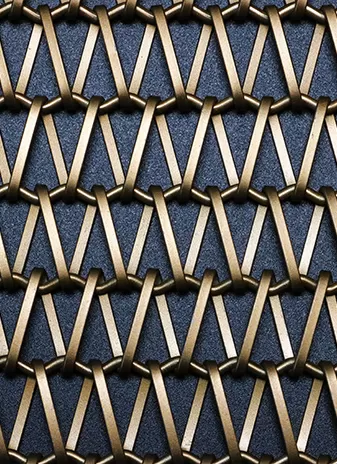
Woven wire mesh is produced by interlacing wires according to a defined weaving pattern. The resulting fabric can have a flexible structure, distinctive texture and a wide range of opening configurations.
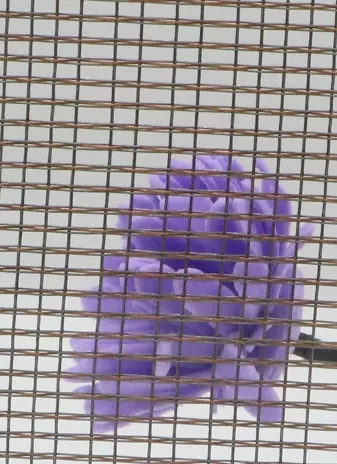
Welded wire mesh is produced by arranging wires in a grid and joining them at their intersections. The result is generally more rigid, with clearly defined openings and a regular geometric appearance.
For agricultural, industrial or security applications, the choice between these two products may be relatively straightforward.
Architectural applications are different.
Here, the mesh is not simply a barrier. It can become part of the building's visual identity, influencing transparency, light transmission, spatial separation, facade appearance and interior atmosphere.
So which is better?
There is no universal answer.
The better choice depends on whether the project prioritizes visual texture, flexibility and light effects, or rigidity, geometric precision and structural stability.
This guide compares woven and welded wire mesh for architectural applications and explains where each type can work best.
1. Woven vs Welded Wire Mesh: What Is the Basic Difference?
The manufacturing method creates the fundamental difference between the two products.
Woven Wire Mesh
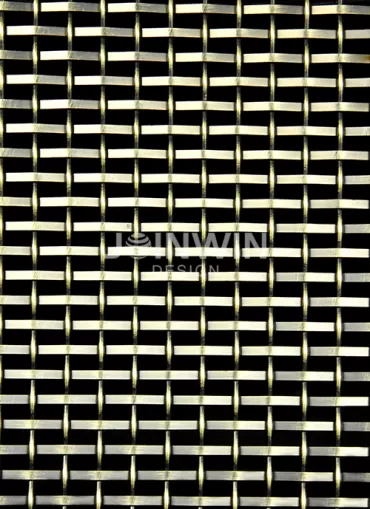
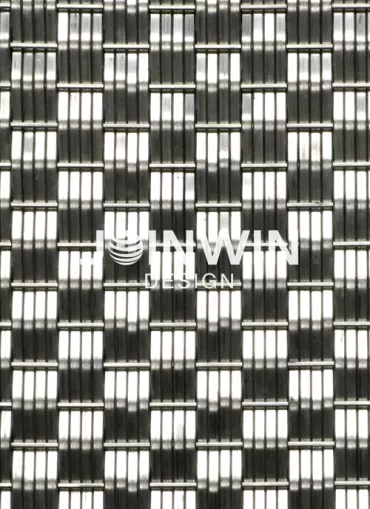
Woven wire mesh is manufactured by interlacing metal wires.
Depending on the design, wires may form plain weave, twill weave, Dutch weave or other customized patterns.
The interwoven construction creates a material that can behave more like a metal fabric than a rigid grid.
Depending on the wire diameter and weave pattern, woven mesh can provide:
Flexible drape
Distinctive surface texture
Variable transparency
Light diffusion
Decorative patterns
Metallic visual effects
This makes woven mesh particularly attractive for architectural interiors, ceilings, partitions, curtains and decorative facades.
Welded Wire Mesh
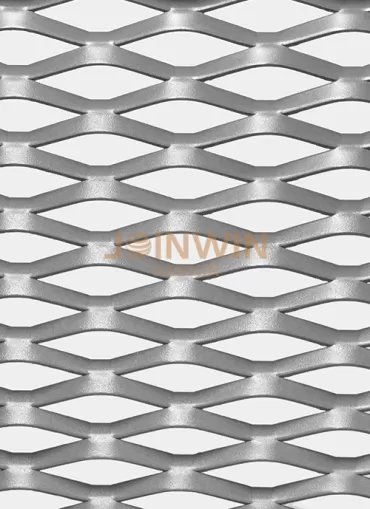
Welded wire mesh is produced by positioning wires in perpendicular directions and joining them at their intersections.
The welded intersections create a relatively rigid grid.
Its appearance is generally more geometric and structured, with regular square or rectangular openings.
Depending on the specification, welded mesh can be useful for:
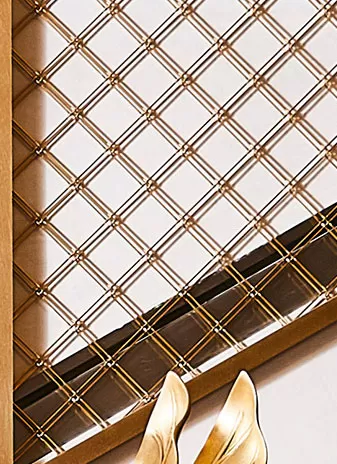
Architectural screens
Partitions
Guarding
Balustrade infill
Exterior screens
Landscape structures
Technical and functional architectural elements
The manufacturing method therefore influences not only appearance but also how the mesh behaves during installation.
2. Visual Appearance: Texture vs Geometry
For architectural projects, appearance can be one of the most important selection criteria.
Woven Mesh: Richer Surface Texture
Woven wire mesh creates a visually complex surface because individual wires overlap and interact with light.
The result can change significantly depending on:
Wire diameter
Opening size
Weave pattern
Viewing angle
Lighting conditions
Surface finish
Installation distance
From a distance, a woven metal facade may appear relatively uniform.
As viewers move closer, the weave becomes more visible and creates a detailed metallic texture.
This layered visual effect can be valuable for:
Hotel interiors
Luxury retail
Museums
Cultural buildings
Corporate interiors
Feature walls
Decorative ceilings
Welded Mesh: Clean and Geometric
Welded wire mesh creates a more clearly defined grid.
Its regular geometry can work particularly well with architectural styles based on:
Repetition
Symmetry
Minimalism
Industrial aesthetics
Modular design
Clean geometric patterns
If the design requires a strong visual grid, welded mesh may be the more appropriate choice.
3. Flexibility and Three-Dimensional Design
One of the biggest differences between woven and welded mesh is flexibility.
Woven Mesh
Many woven architectural meshes can be bent, folded, curved or suspended depending on the construction.
This makes them suitable for applications where the mesh needs to follow a curved architectural surface.
Potential applications include:
Curved partitions
Draped ceilings
Hanging curtains
Curved facade elements
Sculptural installations
Decorative room dividers
The mesh can sometimes create a softer transition between architectural spaces than a rigid panel.
Welded Mesh
Welded mesh generally has greater inherent rigidity.
This can be beneficial when the design requires:
Flat panels
Straight surfaces
Stable openings
Fixed partitions
Rigid screens
Consistent geometric alignment
Rather than treating flexibility as an advantage or disadvantage, it should be viewed as a design characteristic.
If the architect wants the mesh to move or drape, woven mesh may be more appropriate.
If the architect wants the mesh to remain fixed and geometrically precise, welded mesh may offer a better starting point.
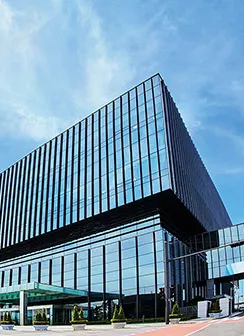
4. Woven Mesh vs Welded Mesh for Facades
Facades are one of the most visually demanding applications for architectural wire mesh.
Woven Mesh Facades
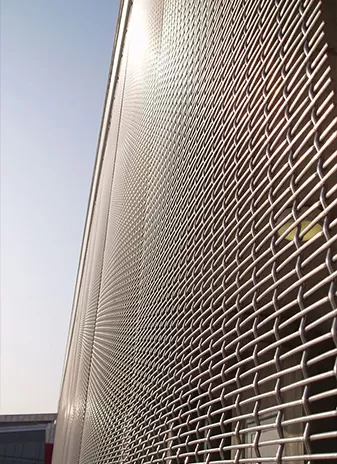
Woven metal fabric can create a layered facade in which the mesh sits in front of glass, concrete or another building surface.
Depending on the opening ratio and installation system, it can:
Create visual depth
Filter sunlight
Reduce direct glare
Add metallic texture
Partially conceal building services
Create changing reflections throughout the day
The appearance can be particularly dramatic when natural sunlight interacts with the metal surface.
Welded Mesh Facades
Welded mesh can create a more rigid architectural screen.
Its regular grid can complement modern architectural concepts based on repetition and modularity.
It may be appropriate where the facade requires a relatively stable screen rather than a fabric-like appearance.
For exterior use, however, designers need to evaluate structural support, wind exposure, corrosion protection and the complete mounting system.
5. Interior Partitions: Which Mesh Works Better?
Interior partitions are another application where the difference becomes obvious.
Woven Mesh for Decorative Partitions
Woven mesh can create semi-transparent partitions that divide a space without completely blocking visual communication.
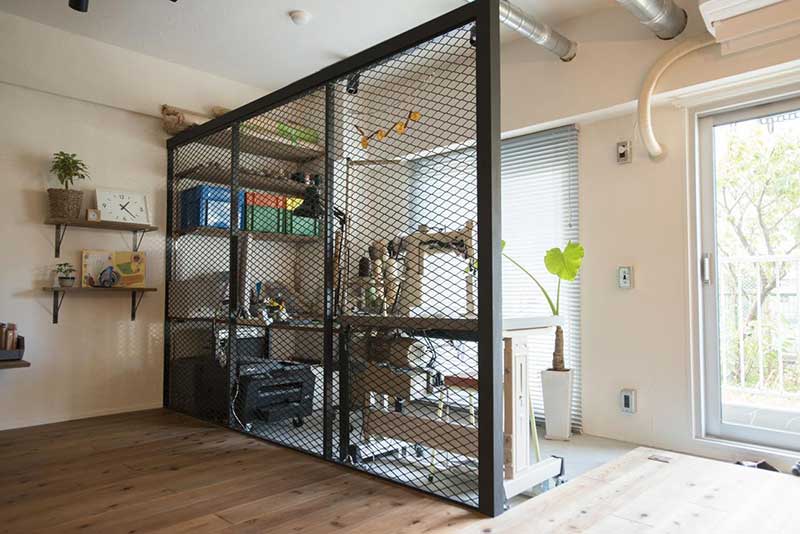
It can be used to separate:
Hotel lobby areas
Restaurants
Retail spaces
Lounge areas
Reception spaces
Exhibition zones
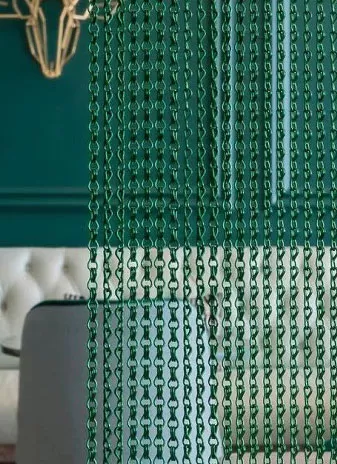
Because the mesh can be relatively flexible, it can also be installed as a curtain-like partition.
This allows architects to create spaces that feel separated but not completely enclosed.
Welded Mesh for Rigid Partitions
Welded mesh can be more appropriate when the partition needs a stable geometric structure.
It can create a clear boundary while maintaining visual openness.
This may suit:
Industrial-style interiors
Office partitions
Stair areas
Technical spaces
Storage zones
Modular interiors
The final choice depends strongly on the desired architectural language.
6. Ceiling Applications: Fabric-Like vs Structured
Architectural mesh can also be used on ceilings.
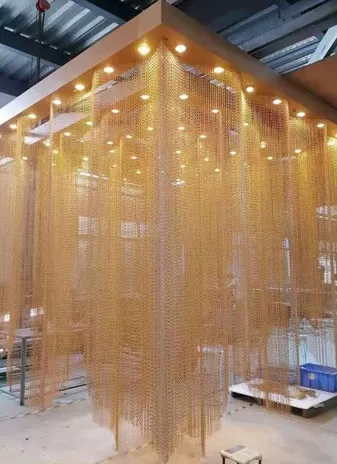
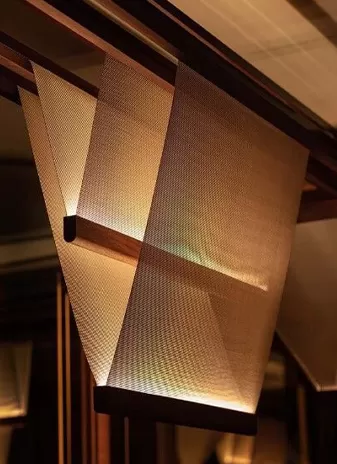
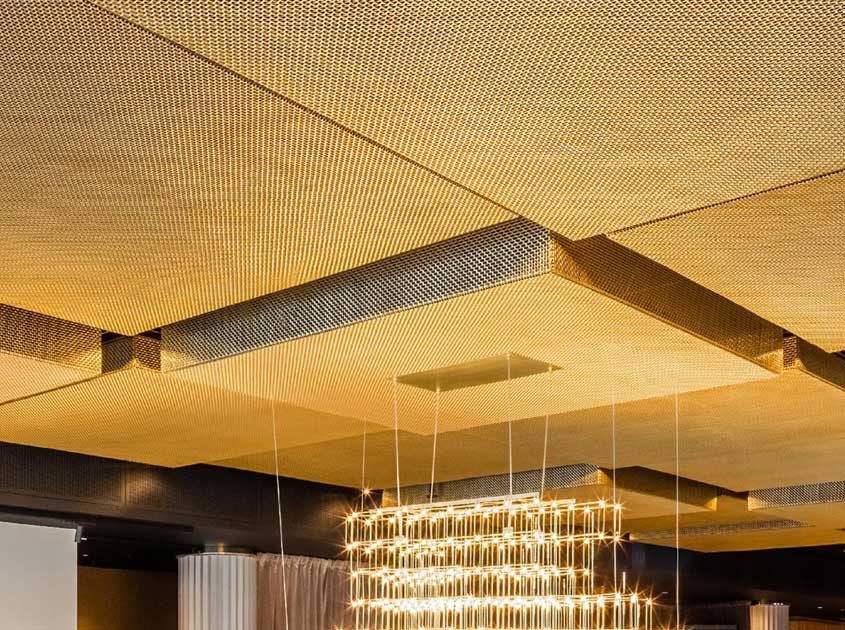
Woven metal fabric can create a suspended surface with a soft visual flow.
It can be suspended horizontally, curved or formed into decorative configurations.
Depending on the design, the mesh can partially conceal:
Lighting
HVAC components
Structural elements
Building services
while still allowing light and air to pass through.
Welded mesh can create a more rigid ceiling grid or screen.
It may be useful where the design requires clearly defined geometric modules rather than a flowing fabric effect.
7. Light and Transparency
Light behavior is one of the most interesting differences between architectural mesh products.
A mesh is not simply transparent or opaque.
Its visual transparency depends on:
Opening ratio
Wire diameter
Weave pattern
Viewing angle
Lighting direction
Distance from the viewer
Background surface
Woven Mesh and Light
The overlapping wires of woven mesh can create subtle shadows and reflections.
As lighting changes, the mesh can appear different from different viewing angles.
This can create a dynamic architectural surface rather than a static pattern.
Welded Mesh and Light
Welded mesh produces a more regular pattern of openings.
The resulting shadows tend to emphasize the geometric grid.
This can work particularly well where the architect wants a clear repetitive pattern.
Neither material automatically provides better light performance. The actual result should be evaluated using the selected opening ratio, material and installation configuration.
8. Material Selection: Stainless Steel, Aluminum and Other Metals
The choice between woven and welded mesh is only one part of the design decision.
The metal itself also influences the appearance and performance.
Stainless Steel
Stainless steel is widely used for architectural mesh where durability, corrosion resistance and a contemporary metallic appearance are important.
Common applications include:
Facades
Interior partitions
Elevator areas
Balustrades
Ceilings
Feature walls
Different stainless steel grades may be selected depending on environmental and project requirements.
Aluminum
Aluminum has a lower density than stainless steel and can be attractive where weight reduction is important.
It can also be finished in various colors and surface treatments.
Potential applications include:
Lightweight decorative screens
Interior partitions
Ceilings
Decorative curtains
Facade elements
For larger installations, reducing the weight of the mesh can influence supporting structure and handling requirements.
Other Metals
Depending on the application, architectural mesh can also be manufactured from materials such as brass, copper or carbon steel.
Material selection should consider:
Corrosion exposure
Weight
Appearance
Surface finish
Structural requirements
Budget
Maintenance expectations
9. Which Is More Suitable for Different Architectural Applications?
The following table provides a practical starting point.
Application
Woven Wire Mesh
Welded Wire Mesh
Decorative facade ★★★★★ ★★★★
Rigid facade screen ★★★★ ★★★★★
Interior curtain ★★★★★ ★★
Decorative partition ★★★★★ ★★★★
Rigid partition ★★★ ★★★★★
Ceiling decoration ★★★★★ ★★★★
Balustrade infill ★★★★ ★★★★★
Industrial-style interior ★★★★ ★★★★★
Curved installation ★★★★★ ★★–★★★
Lightweight decorative screen ★★★★ ★★★★
Geometric grid design ★★★★ ★★★★★
These ratings are design-oriented guidance rather than engineering performance ratings.
Actual suitability depends on the specific mesh construction, material, dimensions and mounting system.
10. Woven vs Welded Mesh: Cost Considerations
Price should not be evaluated by comparing the two product names alone.
The final cost can be affected by:
Metal type
Wire diameter
Opening size
Mesh dimensions
Surface finish
Weave pattern
Welding specifications
Panel or roll format
Edge treatment
Mounting system
Project quantity
A simple welded mesh panel may be relatively straightforward to manufacture.
A decorative woven architectural mesh with a specialized weave pattern, stainless steel material and customized finishing may require significantly more manufacturing work.
However, a lower material price does not necessarily mean a lower total project cost.
Installation method, supporting structure, cutting, framing and maintenance can all influence the final budget.
Architects and contractors should therefore compare the complete system rather than only the price per square meter.
11. What Should Architects Specify Before Ordering?
A common problem in architectural mesh procurement is that the design specification does not contain enough technical information.
Instead of simply specifying "stainless steel architectural mesh," the project should define the relevant characteristics.
Important specifications may include:
Metal material and grade
Wire diameter
Mesh opening
Weave pattern
Opening ratio
Mesh width and length
Surface finish
Color, if applicable
Panel or roll format
Edge treatment
Mounting method
Required supporting structure
Project quantity
For woven mesh, the exact weave pattern should be identified.
For welded mesh, wire spacing and welding requirements should be clearly defined.
For large facade projects, the architect should also coordinate mesh specifications with structural and mounting requirements.
12. Common Mistakes in Architectural Mesh Selection
Choosing Based Only on Appearance
A sample may look attractive in a showroom but behave differently when installed across a large facade or ceiling.
Always consider scale, lighting and viewing distance.
Treating All Stainless Steel Mesh as the Same
Different grades, wire diameters, weave patterns and finishes can produce very different results.
Ignoring the Mounting System
Architectural mesh is part of a larger installation system.
The frame, cable, rod, track, tensioning system or supporting structure can significantly influence the finished appearance.
Selecting Mesh Before Defining the Design Objective
Start with the desired architectural effect.
Do you need:
A rigid screen?
A flowing curtain?
A semi-transparent divider?
A light-filtering facade?
A geometric pattern?
A decorative ceiling?
The answer will help determine the appropriate mesh type.
Comparing Prices Without Matching Specifications
A woven stainless steel mesh and a galvanized welded mesh are not directly comparable simply because both are called "wire mesh."
Material, construction and application need to be matched before price comparisons are meaningful.
13. A Practical Selection Process for Architects
A simple five-step process can make architectural mesh selection easier.
Step 1: Define the Visual Objective
Decide whether the mesh should look soft, flowing, geometric, industrial, luxurious or minimalist.
Step 2: Define the Functional Requirement
Determine whether the mesh needs to provide screening, partitioning, light filtering, fall protection, decoration or another function.
Step 3: Select the Mesh Construction
Choose woven mesh when flexibility, texture and fabric-like appearance are important.
Choose welded mesh when rigidity, geometric precision and stable openings are priorities.
Step 4: Select the Metal
Evaluate stainless steel, aluminum or other materials based on weight, corrosion resistance, appearance and budget.
Step 5: Coordinate the Installation System
Confirm frames, tracks, cables, rods, tensioning components and supporting structures before finalizing the mesh specification.
Frequently Asked Questions
Is woven wire mesh better than welded wire mesh for architecture?
Neither is universally better. Woven mesh is often more suitable for flexible, decorative and fabric-like architectural applications, while welded mesh can be advantageous where rigid geometric structures are required.
Can woven wire mesh be used for building facades?
Yes. Architectural woven mesh can be used as facade screens, solar-filtering elements and decorative building skins when properly designed and supported.
Is welded wire mesh suitable for interior decoration?
Yes. Welded mesh can be used for partitions, screens, balustrade infill, ceilings and industrial-style interiors.
Which architectural mesh is better for curved surfaces?
Woven mesh is generally more adaptable to curved or draped installations because of its flexible construction. However, the exact behavior depends on the weave, wire diameter and supporting system.
Which is easier to install?
Neither is automatically easier in every project. Woven mesh may require specialized hanging or tensioning systems, while welded mesh may require frames or rigid supports. Installation complexity depends on the design.
Is stainless steel the best material for architectural mesh?
Stainless steel is an excellent option for many architectural applications because of its durability and contemporary appearance, but aluminum and other metals may be preferable when lower weight, specific colors or different visual characteristics are required.
Conclusion: Choose the Mesh That Supports the Design Intent
Woven and welded wire mesh should not be viewed simply as competing products.
They create different architectural possibilities.
Woven wire mesh can provide flexibility, texture, transparency and fabric-like movement, making it attractive for decorative facades, curtains, partitions and ceilings.
Welded wire mesh offers a more rigid and geometric appearance, making it useful for structured screens, partitions, balustrade infill and modern industrial-style applications.
The best choice depends on the project's design intent, functional requirements, material selection, installation system and budget.
Joinwin Design specializes in architectural wire mesh solutions for commercial, hospitality, cultural, residential and other architectural environments. Our product range includes woven metal mesh, decorative wire mesh, aluminum chain curtains, rope mesh and other customized architectural mesh systems.
Share your application, material preference, dimensions and design concept with our team. We can help you evaluate a suitable architectural mesh construction and finish for your project.
Hot Products
Become your professional partner in the architectural decorative mesh industry.


NAVIGATION
Contact Us
Phone:
+86 180 3457 7839
FAX:
+86 311 8961 3055
Address:
The Filter Industrial Part of Anping, Hebei, China