
Company News
Oct. 27, 2026
A chain curtain can transform an ordinary doorway, restaurant partition, retail display, or hotel interior into a distinctive architectural feature. Unlike conventional fabric curtains, metal chain curtains create a combination of transparency, movement, texture, and reflected light while maintaining a visually open space.
However, not every chain curtain produces the same effect. Chain material, link size, curtain density, color, dimensions, and suspension method all influence the finished appearance and practical performance.
For interior designers, architects, contractors, and commercial buyers, choosing the right chain curtain means balancing visual impact with durability, installation requirements, maintenance, and budget.
This guide explains how to specify a chain curtain for an interior project, from the intended design effect to the final installation details.
1. Start With the Design Purpose, Not the Chain Size
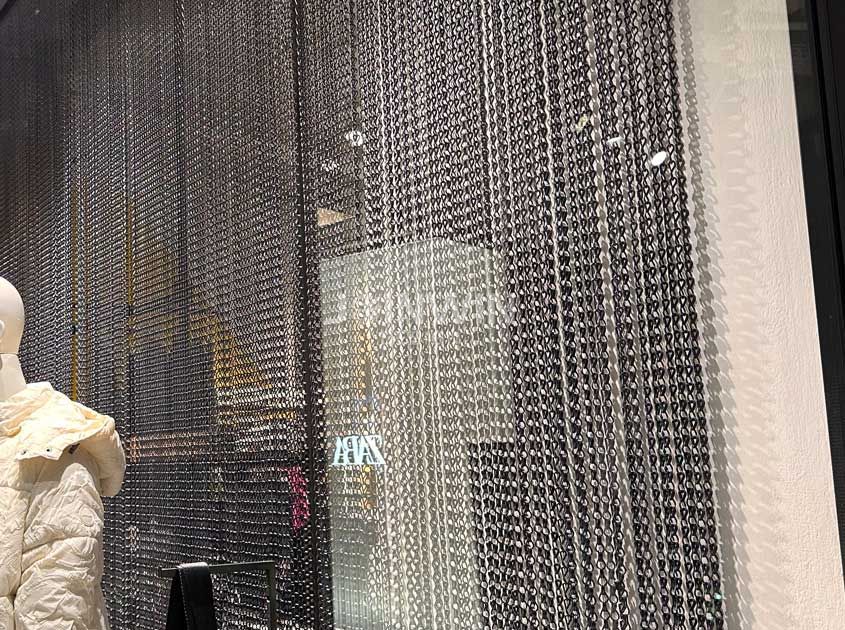
Before choosing a chain curtain, determine what role it needs to play in the space. The same product can look very different depending on whether it is used as a decorative backdrop, a room divider, a doorway treatment, or a feature wall.
Decorative backdrop
In hotel lobbies, restaurants, showrooms, and retail interiors, a chain curtain can create a textured background behind reception desks, display areas, or seating zones.
The design may prioritize metallic reflections, color coordination, and visual depth rather than privacy.
Flexible space divider
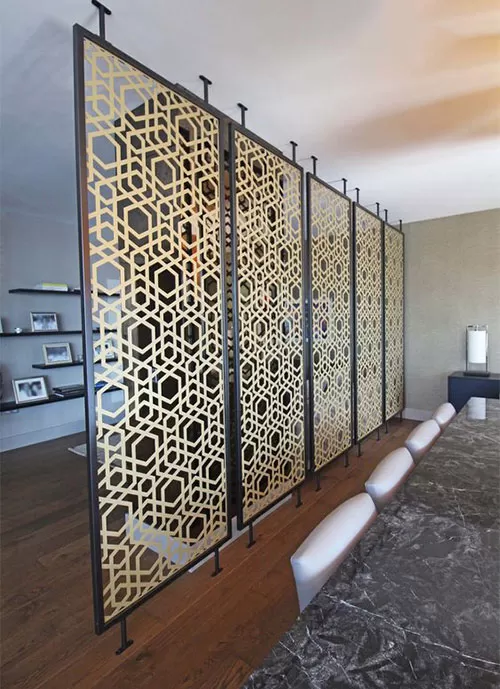
In open-plan restaurants, lounges, studios, and commercial interiors, chain curtains can visually separate areas without creating the solid appearance of a full-height wall.
The amount of visual separation depends on the chain construction, density, lighting, and viewing angle. A chain curtain should not be assumed to provide complete privacy or acoustic insulation.
Doorway and entrance feature
A chain curtain can frame an entrance or provide a distinctive transition between adjacent spaces. In this application, movement, clearance, ease of passage, and resistance to tangling are important.
Designers should consider how frequently people will pass through the curtain and whether the selected construction is appropriate for repeated contact.
Display and feature installations
Retailers and exhibition designers may use chain curtains to highlight products, define temporary zones, or create layered visual effects.
Here, color, lighting, mounting flexibility, and ease of removal may be more important than the requirements of a permanent architectural installation.
The first decision is simple: Define whether the curtain is intended primarily for decoration, visual separation, entrance treatment, or repeated-contact use. This will guide the rest of the specification.
2. Choose the Right Material: Aluminum or Stainless Steel?
Material selection affects weight, appearance, handling, corrosion resistance, and cost.
Two common options for decorative metal chain curtains are aluminum and stainless steel. The most suitable choice depends on the intended application and the product construction.
Aluminum chain curtains
Aluminum chain curtains are often selected for their relatively low weight and wide range of decorative finishes.
Depending on the product, aluminum chains may be available in different colors and surface treatments, making them useful for retail displays, restaurants, hospitality interiors, and contemporary decorative installations.
Their lower weight can also simplify handling and may reduce the load imposed by the curtain itself on the suspension system.
However, buyers should confirm the alloy, surface treatment, color consistency, and suitability for the installation environment. A colored finish should not be assumed to be scratch-proof or permanently unchanged under all conditions.
Stainless steel chain curtains
Stainless steel chain curtains are often considered where a metallic appearance, durability, or a more industrial architectural character is desired.
They may suit selected commercial interiors, feature walls, and projects where a stainless steel finish is part of the design language.
The actual performance depends on the stainless steel grade, chain construction, surface condition, and surrounding environment. Stainless steel is corrosion-resistant rather than corrosion-proof, particularly in chloride-rich or chemically aggressive conditions.
Stainless steel may also be heavier than an otherwise comparable aluminum product, so the suspension system and supporting structure must be suitable for the finished installation.
Material comparison
Selection factor
Aluminum chain curtain
Stainless steel chain curtain
Weight Generally lighter for comparable constructions Often heavier
Appearance Broad decorative color options may be available Natural metallic finishes are common
Design style Color-led, contemporary, retail and hospitality designs Industrial, understated, or metallic architectural designs
Corrosion considerations Depends on alloy, finish, and exposure Depends on grade, finish, and exposure
Support requirements Must be calculated or specified for the actual product Must account for the actual curtain weight and support arrangement
Best selection method Match finish, weight, and intended use Match grade, finish, environment, and intended use
Neither material is universally better. Request the actual product weight per square meter or per finished curtain, along with material and finish details, before comparing quotations.
3. Understand Chain Structure and Visual Density
One of the most important design decisions is how dense the curtain should look.
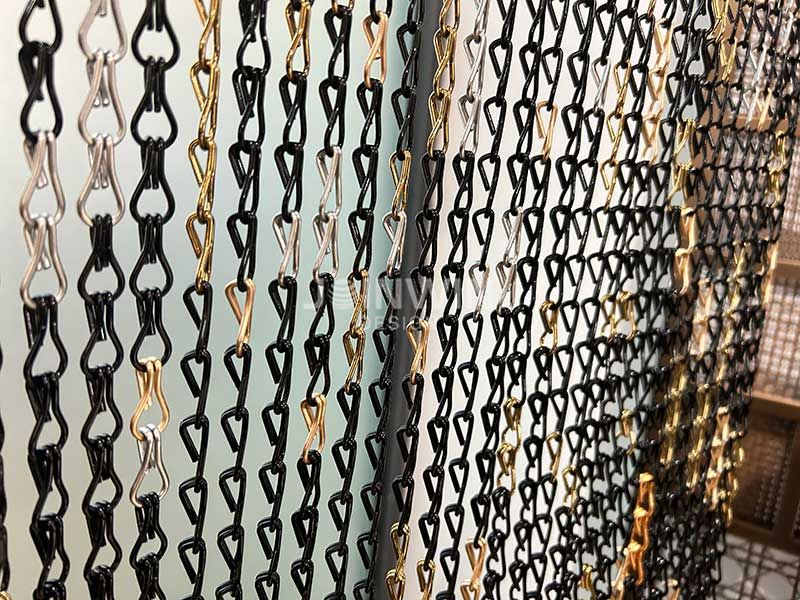
A chain curtain's visual density depends on its link geometry, the number of chain strands per unit width, the way the chains hang, and the viewing angle.
A denser curtain generally creates a more continuous metallic surface. A more open construction allows more of the background to remain visible.
Open, lightweight appearance
A relatively open chain arrangement can work well when the goal is to preserve the feeling of an open room while adding texture and movement.
This approach may suit casual dining spaces, contemporary retail interiors, and areas where the curtain is mainly decorative.
Balanced visual separation
A medium-density arrangement can provide a stronger visual boundary without making the adjacent space appear completely closed.
It may work well for restaurant seating zones, hotel lounge areas, or transitions between different functional spaces.
Dense, statement-making appearance
A denser curtain can create a more prominent feature wall or metallic backdrop. It may be suitable where the chain curtain is intended to attract attention or visually define a zone.
However, increasing density generally increases material use and finished weight. It may also affect visibility, movement, cleaning access, and support requirements.
There is no single density that works for every project. The correct choice should be judged using samples or a representative mock-up under the intended lighting conditions.
Why a physical sample matters
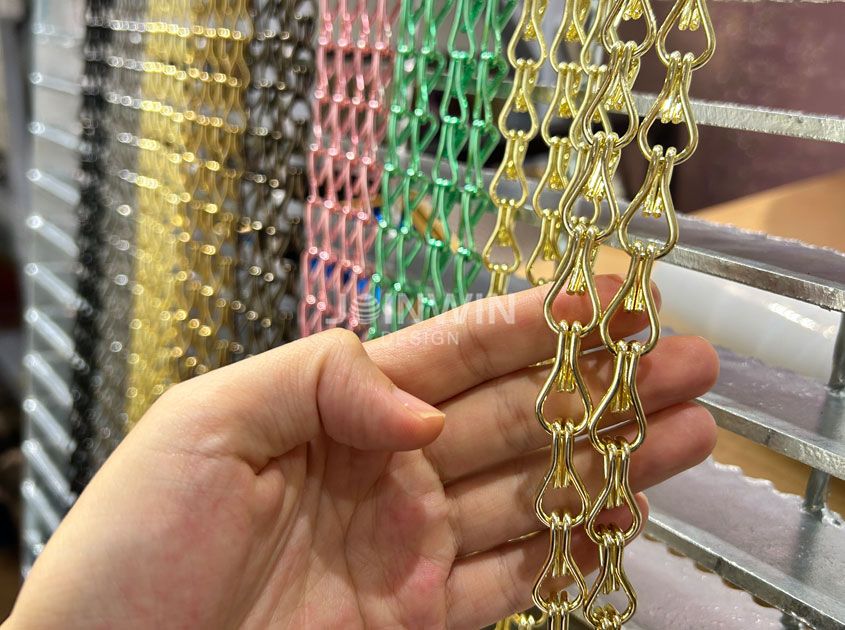
A small chain sample can help verify color and link appearance, but it may not accurately represent the visual effect of a full-width installation.
Where possible, request a larger sample or sample section that demonstrates the intended density and hanging arrangement.
Review it against the actual background, lighting, floor finish, and adjacent materials. This helps prevent the common problem of choosing a chain curtain from a product photograph that looks very different once installed.
4. Select the Right Color and Finish for the Interior
Color is not just a decorative detail. It changes how a chain curtain reflects light and how strongly it contrasts with the surrounding materials.
Silver and natural metallic finishes
Silver-colored or natural metallic finishes can complement glass, concrete, stone, neutral walls, and contemporary furniture.
They may also create a subtle reflective effect under directional lighting.
Black and dark finishes
Dark finishes can create a more defined visual boundary and work well with modern retail interiors, dramatic restaurant lighting, and high-contrast design schemes.
However, dust, fingerprints, scratches, and surface marks may be more noticeable on some finishes than others.
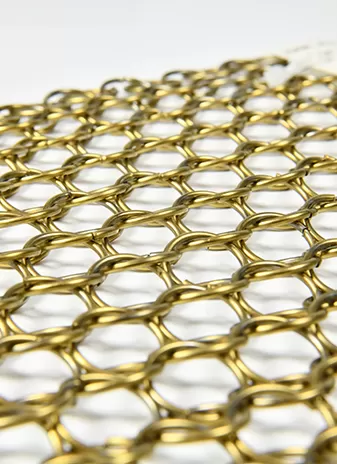
Gold, bronze, and warm metallic colors
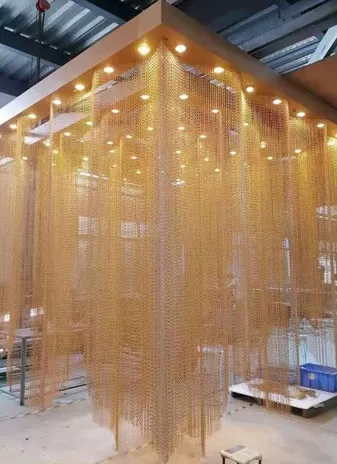
Warm metallic tones can coordinate with wood, warm lighting, decorative stone, and hospitality interiors.
For large installations, buyers should confirm color consistency across all supplied sections and clarify whether the color is achieved through anodizing, coating, or another specified finish.
Custom colors
Custom colors can help match a brand identity or architectural palette. Before ordering, confirm the available finish process, sample approval procedure, minimum order requirements, and any limitations on color matching.
Design tip: Evaluate the curtain in the actual lighting environment. The same finish can look bright and reflective under direct lighting but darker or more subdued under indirect illumination.
5. Get the Dimensions and Mounting Method Right
Even an attractive chain curtain can look unfinished if the proportions or mounting details are wrong.
Before requesting a quotation, determine the installation width, finished drop, mounting position, and required coverage.
Width
Measure the full opening or wall section to be covered. Then determine whether the curtain should cover the opening exactly, extend beyond its edges, or provide additional width for a particular hanging effect.
For doorway applications, also consider whether the curtain needs to move aside or remain within a defined passage area.
Height and finished drop
Measure from the intended suspension point to the required lower edge.
Decide whether the chains should finish above the floor, end close to it, or follow another specified arrangement. Allow for the mounting rail, hooks, rings, or other suspension components when calculating the finished drop.
Do not assume that the ordered chain length automatically equals the installed curtain height.
Mounting method
Common approaches include a top rail, a suitable track, hooks, or a custom support arrangement, depending on the product design.
The selected method should support the actual curtain weight and accommodate the intended movement and maintenance requirements.
Check whether the mounting surface is concrete, masonry, timber, steel, or another material. The appropriate anchors and fixings depend on the substrate and the loads involved.
Access and removal
In commercial interiors, chain curtains may need periodic cleaning, adjustment, or replacement. A mounting system that permits safe removal can make maintenance easier.
Confirm whether the curtain is intended to be fixed permanently or removed regularly for cleaning or layout changes.
6. Consider Lighting, Movement and the Surrounding Space
Chain curtains are visually dynamic. Their appearance changes with the light source, viewing angle, and movement of people or air.
Lighting
Directional lighting can highlight individual links and create sparkling reflections. Backlighting can emphasize the chain pattern and create a layered effect.
However, highly reflective surfaces may produce unwanted glare in some settings. For hospitality and retail projects, review the curtain alongside the proposed lighting layout rather than selecting the finish in isolation.
Movement
A hanging chain curtain may move when touched or exposed to air currents. This movement can contribute to the design, but excessive movement may be distracting in certain settings.
For frequently used entrances, consider how the curtain responds to repeated passage and whether it is likely to tangle or strike adjacent fixtures.
Sightlines
A chain curtain may allow people to see through the installation, but visibility depends on chain density, lighting contrast, background conditions, and viewing angle.
If the design requires visual privacy, use a representative sample or mock-up to check the effect. Do not rely solely on the percentage of open area or a product photograph.
Space planning
Allow enough clearance around the curtain for people, furniture, doors, and other equipment.
In restaurants and commercial buildings, also consider accessibility, emergency egress, fire-safety requirements, and any restrictions on materials or suspended installations. The proposed use must comply with applicable local requirements.
7. How to Estimate Chain Curtain Quantity and Budget
The price of a chain curtain depends on more than the nominal opening size.
Key factors include:
Material and alloy
Link dimensions and chain construction
Curtain width and finished drop
Chain density
Color and surface finish
Top rail or track system
Mounting accessories
Custom fabrication and packaging
Shipping and installation requirements
For a simple rectangular installation, begin with the nominal curtain area:
Nominal curtain area = Finished width × Finished drop
For example, a curtain measuring 3 meters wide and 2.5 meters high has a nominal area of 7.5 square meters.
This figure helps establish the basic size, but it does not determine the final price by itself. Chain density, material weight, suspension hardware, custom finishes, and fabrication details can change the cost significantly.
When comparing suppliers, ask whether the quotation includes the curtain alone or the complete system with its rail, brackets, and mounting accessories.
For larger commercial projects, request a quotation based on the same dimensions, finish, and density from each supplier. This makes price comparisons much more meaningful.
8. Common Mistakes When Buying Decorative Chain Curtains
Choosing from a photograph alone
Product images may not represent the final density, scale, color, or reflection of a full installation.
Better approach: Review samples under representative lighting and confirm the intended chain arrangement.
Ignoring the finished weight
A large or dense metal curtain can impose a substantial load on the supporting structure.
Better approach: Request the estimated finished weight and verify that the rail, anchors, and supporting substrate are suitable.
Confusing chain length with finished curtain height
Suspension hardware and the hanging arrangement may affect the final drop.
Better approach: Specify the measurement reference and confirm the installed dimensions with the supplier.
Choosing a finish without considering maintenance
Some finishes reveal dust, scratches, or fingerprints more readily than others.
Better approach: Consider cleaning frequency, accessibility, and the expected appearance over time.
Ordering different sections without confirming consistency
Separate batches may differ in color, finish, or construction if the specification and approval process are unclear.
Better approach: Confirm the finish, dimensions, sample approval, and batch consistency requirements before production.
Overlooking the mounting system
The curtain may be attractive, but unsuitable fixings can create installation problems or safety risks.
Better approach: Include the support arrangement and mounting requirements in the original design and purchasing specification.
9. Chain Curtain Specification Checklist for Designers and Buyers
Before placing an order, prepare a concise specification covering the following details.
Specification
What to confirm
Application Doorway, room divider, feature wall, retail display, or another use
Material Aluminum, stainless steel, or another specified material
Chain construction Link style, dimensions, and arrangement
Density Required visual coverage and transparency
Finished dimensions Width, drop, and measurement reference
Color and finish Standard or custom finish, with sample approval if needed
Mounting system Rail, track, hooks, brackets, and suitable fixings
Weight Estimated total curtain weight and support requirements
Movement Fixed, movable, frequently handled, or removable arrangement
Maintenance Cleaning access and expected maintenance procedure
Quantity Number of curtains, total dimensions, and any custom sections
Delivery Packaging, destination, and installation schedule
Compliance Applicable building, fire-safety, accessibility, and project requirements
For custom installations, drawings or photographs of the opening can help the manufacturer understand the required dimensions and mounting arrangement.
If the project involves several curtains, identify each location separately. A schedule showing opening width, drop, finish, and mounting method can reduce confusion during production and installation.
Frequently Asked Questions
Are metal chain curtains suitable for restaurants and hotels?
They can be suitable for decorative partitions, entrances, reception areas, and feature installations, provided the selected material, finish, mounting system, and use comply with the project's requirements.
Do chain curtains provide privacy?
They provide varying degrees of visual separation, but they generally should not be treated as complete privacy screens. The effect depends on chain density, lighting, viewing angle, and background conditions.
Which is better for interior decoration: aluminum or stainless steel chain curtains?
Aluminum may be attractive where lower weight and decorative colors are priorities. Stainless steel may be preferred for a natural metallic appearance or particular durability requirements. The right choice depends on the actual product, installation environment, and design objectives.
Can chain curtains be made to custom dimensions?
Many decorative chain curtain systems can be configured for project-specific widths and drops. Confirm the manufacturer's available dimensions, cutting or finishing method, mounting system, and minimum order requirements.
How do I clean a metal chain curtain?
Cleaning depends on the material and surface finish. Use a cleaning method approved for the specific product, avoid incompatible chemicals and abrasive tools, and ensure that the curtain can be accessed safely for maintenance.
Can chain curtains be installed as room dividers?
Yes. They can visually separate areas while preserving a degree of openness. However, they do not automatically provide acoustic separation, fire compartmentation, or full privacy.
Conclusion
Choosing the right chain curtain requires a coordinated decision about material, chain density, color, dimensions, mounting, lighting, and maintenance.
Aluminum chain curtains may suit projects where low weight and decorative finishes are important, while stainless steel options may fit designs that favor a natural metallic appearance or particular material requirements. In both cases, the finished effect depends on the actual chain construction and the way the curtain is installed.
For designers, contractors, and commercial buyers, the most reliable approach is to define the intended visual effect first, review a representative sample, and confirm the complete mounting and product specification before ordering.
Joinwin design supplies decorative chain curtain products for commercial and interior design applications. Share your required dimensions, preferred material and finish, quantity, and installation details to discuss a suitable configuration for your project.
Hot Products
Become your professional partner in the architectural decorative mesh industry.


NAVIGATION
Contact Us
Phone:
+86 180 3457 7839
FAX:
+86 311 8961 3055
Address:
The Filter Industrial Part of Anping, Hebei, China