Company News
Oct. 20, 2026
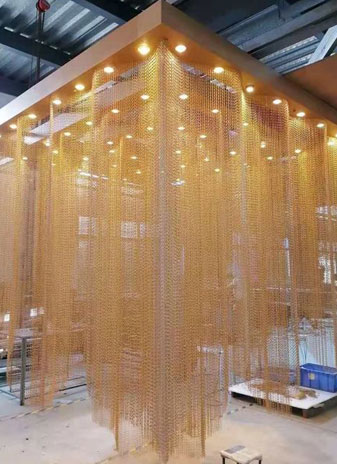
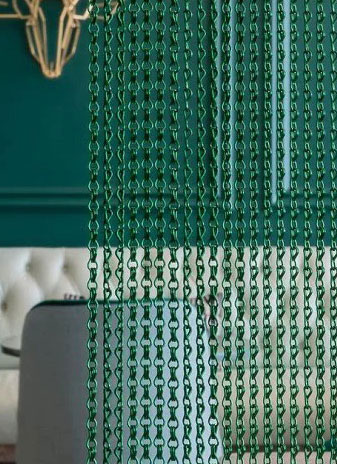
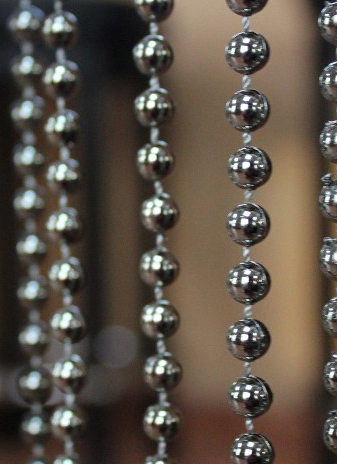
A chain curtain can transform an ordinary doorway, retail display, restaurant interior, or hotel lobby into a space with a distinctive visual character. Unlike a conventional fabric curtain, a metal chain curtain creates a flexible screen made of individual hanging links. It allows light and air to pass through while introducing texture, movement, and a decorative metallic finish.
However, choosing the right chain curtain involves more than selecting a color that matches the interior. Chain size, material, hanging density, opening width, installation method, and the intended level of visual separation all influence the final result.
For interior designers, architects, contractors, and project buyers, the best choice is one that supports the design concept while meeting practical requirements for installation, maintenance, and daily use.
This guide explains how to select a chain curtain for interior decoration, from the first design decision to the final product specification.
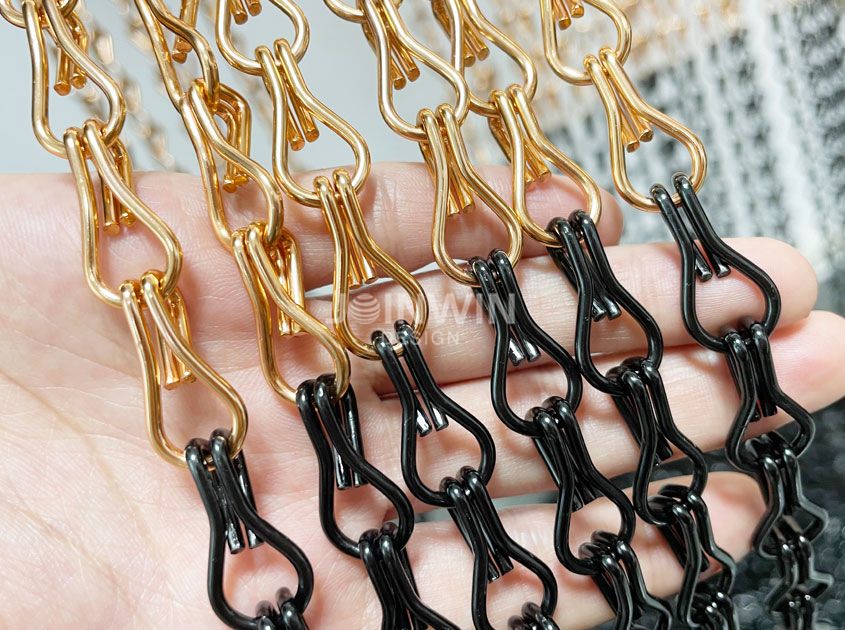
1. Start With the Purpose of the Chain Curtain
Before choosing materials or colors, define what the curtain needs to achieve. The same chain curtain can look very different depending on its position, surrounding lighting, and viewing distance.
Decorative feature
If the curtain is intended to create a visual focal point, appearance may be the primary consideration. A metallic surface, carefully selected color, and appropriate chain density can add texture and visual depth to an otherwise simple interior.
This approach works well for reception areas, retail displays, hotel interiors, and feature walls.
Flexible space divider
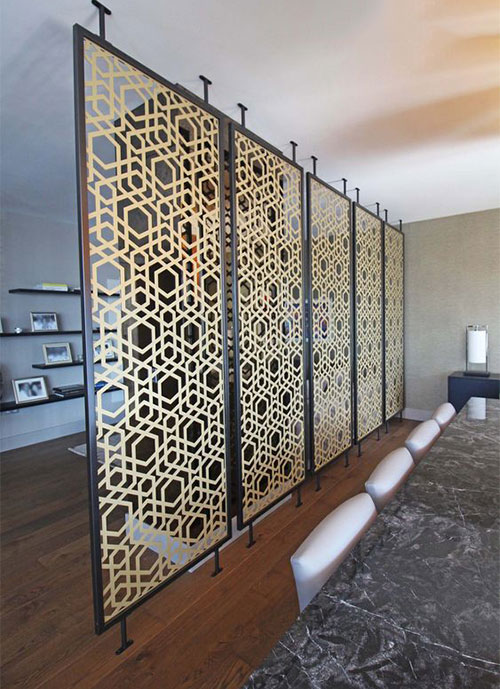
A chain curtain can distinguish two zones without creating a completely solid partition. For example, it may separate a dining area from a circulation route or divide a lounge into visually distinct sections.
Unlike a rigid wall, the curtain can maintain a sense of openness. However, it should not be treated as a soundproof partition or a privacy screen equivalent to an opaque wall.
Doorway or entrance treatment
At an entrance, a chain curtain can create a transition between spaces while retaining a lightweight appearance. The design should account for movement, clearance, access, and the possibility of people or objects contacting the hanging chains.
Display and merchandising background
Retail designers may use chain curtains behind product displays, in window arrangements, or around temporary exhibition areas. In these applications, the curtain's finish and density should complement the merchandise rather than compete with it.
Design principle: Decide whether the chain curtain is primarily decorative, spatial, or functional. This decision will guide almost every specification that follows.
2. Choose the Right Chain Curtain Material
Material affects appearance, weight, corrosion behavior, maintenance, and the overall character of the interior.
Different chain curtain products can look similar in photographs but have different link constructions and material properties. Confirm the actual product material before ordering.
Aluminum chain curtain
Aluminum chain curtains are popular in decorative interior applications because aluminum is relatively lightweight compared with many steel alternatives. This can be useful for large hanging displays and suspended decorative screens, subject to the load capacity of the supporting structure.
Aluminum can also be supplied in different finishes and colors, depending on the manufacturer's process.
Potential applications include:
Retail displays and window dressing.
Restaurant and bar interiors.
Hotel lobbies and lounge areas.
Decorative doorways and room dividers.
Exhibition stands and temporary installations.
The appearance and durability of a colored finish depend on the coating or finishing process, product quality, and use conditions.
Stainless steel chain curtain
Stainless steel may be suitable when the design calls for a contemporary metallic appearance or when the environment places greater demands on corrosion resistance.
The specific stainless steel grade matters. Different grades have different corrosion resistance, and no grade should be assumed suitable for every chemical or moisture exposure.
Stainless steel can be considered for modern commercial interiors, selected hospitality projects, and designs where the natural metallic finish is part of the visual concept.
Other metal finishes
Some decorative chain curtains are available in different metallic colors or surface treatments. The exact options depend on the product and manufacturer.
For a project with strict color requirements, request a sample or approved finish reference. Screen displays, photographs, and showroom lighting can make the same finish appear different.
Material comparison
Material
Visual character
Main consideration
Potential applications
Aluminum Lightweight, decorative metallic appearance Confirm link construction, finish, and support capacity Retail, restaurants, hotels, displays
Stainless steel Modern metallic appearance Specify grade according to the environment Contemporary commercial and interior projects
Other finished metal options Depends on the base metal and surface treatment Verify the finish, coating, and maintenance requirements Feature installations and custom designs
The material should be selected according to the design, installation requirements, exposure conditions, and budget—not solely by the appearance shown in a product image.
3. Select the Right Chain Size and Hanging Density
One of the most important design decisions is how closely the chains are arranged.
Chain size and hanging density influence the visual weight of the curtain, how much of the background remains visible, how light passes through the screen, and how the curtain moves.
Open and lightweight appearance
A more open arrangement creates a delicate visual effect. The background remains easier to see, and the curtain may feel less visually dominant in a small interior.
This can work well in compact retail spaces, light decorative dividers, and interiors where the goal is to add texture without creating a heavy visual boundary.
Medium-density arrangement
A medium-density chain curtain provides a more noticeable metallic screen while retaining a sense of openness.
It can be a useful starting point for reception areas, restaurant interiors, decorative entrances, and room divisions where both the curtain and the space behind it should remain visually relevant.
Dense and visually prominent arrangement
A denser arrangement creates a stronger visual surface. It may help draw attention to a feature area or make the boundary between two zones more noticeable.
However, increasing density generally increases material consumption and the total load. It may also reduce visibility through the curtain and change the way it moves.
How to compare density
Ask the manufacturer how density is defined for the specific product. Depending on the chain curtain design, relevant details may include:
Chain or link dimensions.
Number of chain strands per unit of width.
Spacing between hanging strands.
Total curtain width and height.
Approximate weight per square meter or per finished curtain.
Hanging and attachment configuration.
There is no universal density that works for every interior. A full-size sample or a sample panel viewed at the intended distance can help designers judge the visual effect more accurately.
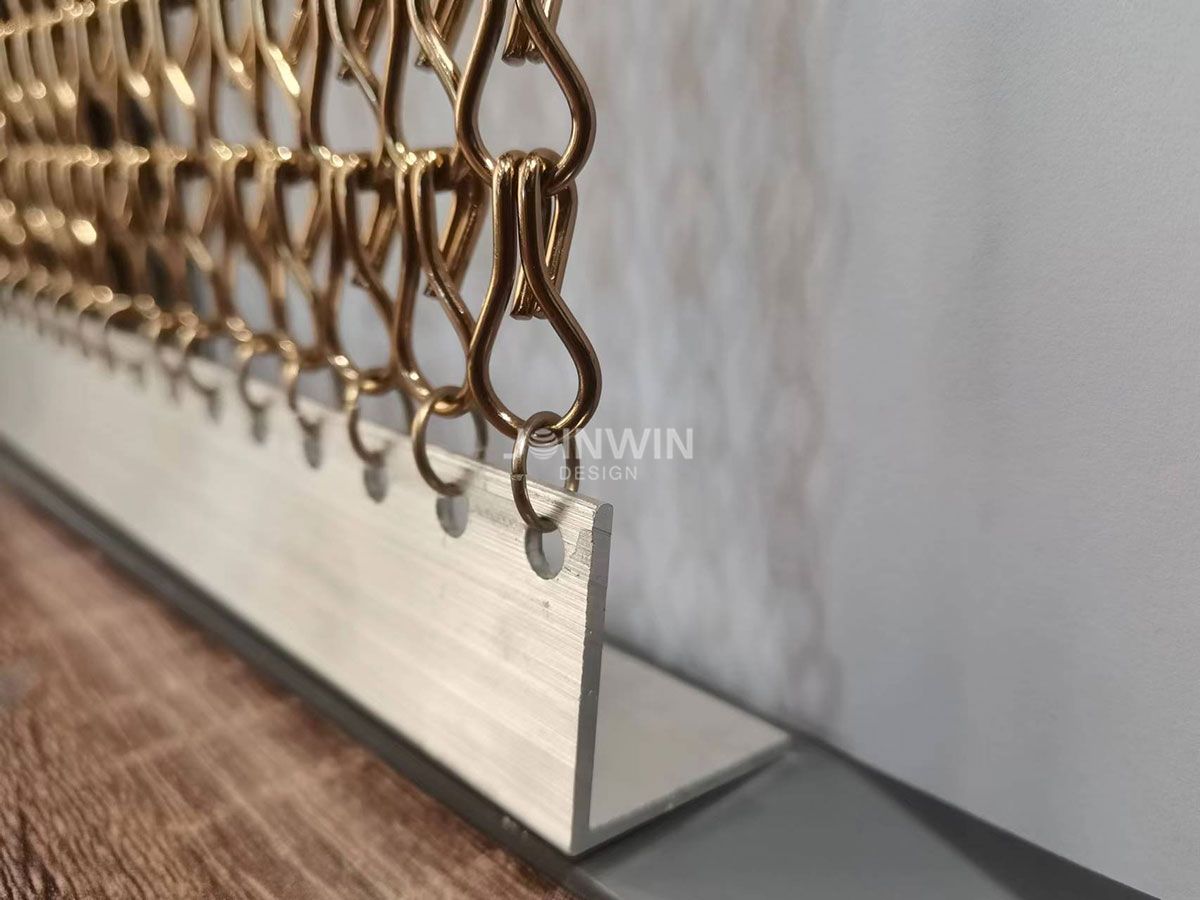
4. Choose a Color That Works With the Interior
Color influences whether the chain curtain blends into the architecture or becomes a central design feature.
The right finish depends on wall colors, flooring, furniture, lighting, surrounding metalwork, and the overall style of the project.
Silver and natural metallic finishes
Silver and natural metallic finishes suit contemporary interiors, industrial-inspired spaces, and minimalist design schemes.
They can coordinate with stainless steel details, glass, concrete, and neutral color palettes. Depending on the surface finish and lighting, the curtain may appear bright, subtle, or reflective.
Black finishes
Black chain curtains create a strong outline and can contrast with light-colored walls, pale flooring, or bright retail displays.
They may suit modern restaurants, bars, exhibition spaces, and interiors with darker metal details.
Gold, bronze, and warm metallic tones
Warm metallic colors can complement wood, warm lighting, textured wall finishes, and hospitality interiors that aim for a more decorative atmosphere.
For premium projects, confirm the exact finish rather than relying on broad color names such as "gold" or "bronze." Different manufacturers may use the same color name for noticeably different appearances.
Matching color to the project
Before approving a finish, consider:
The dominant colors in the room.
Whether the curtain should blend in or stand out.
How daylight and artificial lighting affect its appearance.
Whether nearby metal fittings need to match.
How fingerprints, dust, and visible surface marks may affect maintenance.
For projects with multiple installations, approve a physical sample before placing the full order whenever possible.
5. Determine the Correct Curtain Width and Height
Incorrect dimensions can undermine an otherwise well-designed installation.
A chain curtain that is too narrow may leave unwanted gaps, while one that is too wide may interfere with nearby furniture, doors, or circulation routes. Excessive height can create installation challenges, and insufficient height may not deliver the intended visual effect.
Measure the installation opening
Measure the actual installation location rather than relying only on architectural drawings. Existing walls, beams, ceilings, floor levels, and mounting points may differ from the original plans.
Record:
Clear opening width.
Required finished curtain height.
Distance from the mounting point to the floor or intended endpoint.
Available clearance around doors and furniture.
Position of the supporting rail or track.
Any required overlap beyond the opening.
For an entrance or doorway, decide whether the curtain should cover only the opening or extend beyond it to create a broader decorative feature.
Account for the mounting method
The finished curtain dimensions depend on how the product attaches to its support. Confirm whether the supplier's stated height includes the top fittings, hooks, or other hanging components.
For large installations, divide the curtain into manageable sections if this supports transportation, handling, maintenance, and replacement. The appropriate section width depends on the product design and support system.
Consider the floor clearance
A chain curtain may hang close to the floor, stop above it, or be arranged according to a specific decorative design. The choice should account for cleaning, foot traffic, movement, and potential contact with the chains.
Avoid allowing the chains to create an unintended trip or entanglement hazard. Public and commercial installations should be assessed for accessibility and local safety requirements.
6. Select a Suitable Hanging and Mounting System
The mounting system is part of the design, not just a technical detail.
Even a decorative chain curtain can be relatively heavy when installed across a large opening. The support must be suitable for the curtain's total weight and the loads created during ordinary use.
Ceiling-mounted installation
Ceiling-mounted chain curtains can create a clean visual effect by suspending the chains from above. This approach may work for room dividers, retail features, and decorative screens.
Before installation, confirm the ceiling construction and the load-bearing capacity of the attachment points. Suspended ceilings and decorative ceiling panels should not automatically be assumed capable of supporting the curtain.
Wall-mounted installation
Wall-mounted supports may be useful for narrow openings, recessed areas, and selected feature installations. The bracket design and fixing method should match the substrate and expected loads.
Track or rail systems
A suitable track or rail can allow a chain curtain to be moved aside when access is required, depending on the product design. This can be useful in spaces that need both a decorative screen and an adjustable opening.
Not every chain curtain is designed for sliding movement. Confirm compatibility with the supplier before specifying a movable arrangement.
Important mounting checks
Before ordering, establish:
Total curtain weight.
Support material and dimensions.
Mounting-point spacing.
Fixing type and substrate.
Whether the curtain is fixed or movable.
Required access for cleaning and maintenance.
Whether installation requires a qualified contractor.
The mounting method should be approved for the actual building conditions. Product selection alone cannot determine whether an existing ceiling or wall is structurally adequate.
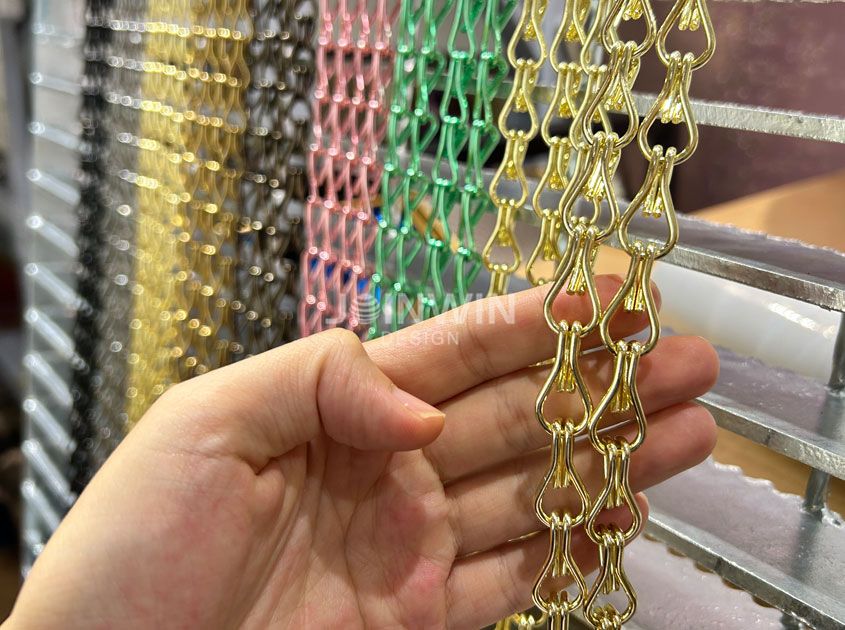
7. Match the Chain Curtain to the Room's Function
A chain curtain should complement the way people use the space.
The same design may be suitable in one location and inconvenient in another because of movement, visibility, cleaning requirements, or contact with nearby objects.
Restaurants and cafés
In dining areas, chain curtains can distinguish seating zones without creating a solid barrier. Designers should consider the circulation route for customers and staff, the proximity of tables, and the need to clean the surrounding area.
The selected material and finish should be suitable for the actual indoor environment. A decorative chain curtain should not obstruct required exits or interfere with fire-safety provisions.
Hotels and hospitality interiors
Hotels may use chain curtains in lobbies, lounges, reception areas, and selected decorative transitions between spaces.
The curtain's finish should coordinate with other interior materials, including lighting fixtures, furniture, wall finishes, and metal accents. For high-traffic areas, durability, maintenance access, and secure mounting deserve particular attention.
Retail stores
In retail environments, chain curtains can create visual layers behind products or mark transitions between departments. Density and reflectivity should be selected so the curtain does not distract from the merchandise.
For window displays, consider how daylight and artificial lighting interact with the metal surface throughout the day.
Homes and residential interiors
A chain curtain may be used as a decorative doorway treatment, a visual divider, or a feature within an open-plan room.
In homes with children or pets, consider possible entanglement, pulling, swinging, and contact hazards. Select the installation and placement accordingly.
Exhibition and event spaces
Temporary installations may prioritize modularity, easy assembly, manageable transport, and the ability to reuse the curtain in different layouts.
Confirm how the curtain sections attach to the support structure and whether repeated installation is compatible with the product design.
8. Understand Light, Visibility, and Privacy
Metal chain curtains create a screen, but they do not function like opaque walls or conventional blackout curtains.
Their visual effect depends on the chain dimensions, hanging density, lighting direction, viewing angle, and background.
Light transmission
Open chain arrangements generally allow more light to pass through and preserve a stronger visual connection between spaces. Denser arrangements create a more prominent surface and may reduce the apparent openness of the view.
Metal finishes can reflect nearby light sources, producing different effects depending on the room's lighting design.
Visibility
A chain curtain may obscure some details without fully hiding the space behind it. Objects directly behind the curtain may remain clearly visible under certain lighting conditions.
If the project requires visual screening, evaluate the product at the actual viewing distance and under representative lighting conditions rather than assuming that a denser curtain will provide complete privacy.
Acoustic performance
A decorative metal chain curtain should not be treated as a soundproofing solution. Although it can visually divide a space, an open chain structure generally does not provide the same acoustic separation as a properly designed solid partition.
If sound control is a major project requirement, a separate acoustic solution may be needed.
9. Plan Cleaning and Long-Term Maintenance
A chain curtain contains many individual links, so maintenance should be considered before the product is installed.
The appropriate cleaning method depends on the material, surface finish, installation height, and surrounding environment.
Regular cleaning
Dust can accumulate between links, especially in areas with limited airflow or where the curtain is close to cooking, retail activity, or frequent human contact.
Routine cleaning may involve gentle dust removal or wiping with a suitable cloth. Follow the manufacturer's instructions for the specific material and finish.
Avoid damaging the finish
Aggressive abrasives or unsuitable cleaning chemicals may scratch or discolor some surfaces. Stainless steel, aluminum, and coated finishes can have different cleaning requirements.
If a special color or surface treatment has been applied, request care instructions from the manufacturer.
Inspect the support system
Periodically check the rail, brackets, fasteners, and attachment points, especially for large or frequently moved curtains. Look for loose fittings, bent components, or damaged links.
A maintenance plan is particularly important for public spaces, hotel interiors, retail environments, and installations above areas with regular foot traffic.
10. Common Mistakes When Buying Chain Curtains
Several avoidable mistakes can lead to disappointing visual results, unnecessary cost, or installation problems.
Choosing by color alone. A finish may look attractive in a small sample but appear very different across a large curtain. Evaluate the sample under representative lighting.
Ignoring density. Chain spacing strongly influences transparency, visual weight, and total material consumption. Confirm the actual arrangement rather than relying on vague descriptions such as "light" or "heavy."
Comparing materials without confirming construction. Two chain curtains may use different link sizes, metal specifications, or finishes even when their product names are similar.
Measuring only the visible opening. The required finished size may need to include overlap, mounting allowances, or clearance around nearby objects.
Underestimating support requirements. Large curtains can place substantial loads on rails, brackets, and attachment points. Confirm the total weight and the suitability of the supporting structure.
Expecting complete privacy or sound insulation. Chain curtains are primarily open decorative screens. Their visibility and acoustic properties should be evaluated against the actual project requirements.
Ordering without confirming the sample. For large commercial projects, verify the approved material, color, link construction, and hanging density before production.
11. A Practical Specification Checklist for Designers and Buyers
When requesting a quotation, provide as much of the following information as possible.
Specification
What to provide
Application Room divider, doorway, feature wall, display, or another use
Material Aluminum, stainless steel, or another specified metal
Finish Natural metallic, black, gold, bronze, or approved custom finish
Overall width Finished curtain width or dimensions of the opening
Overall height Required hanging height and measurement reference
Chain design Link style and dimensions, according to the selected product
Hanging density Strand spacing or other manufacturer-defined density specification
Mounting method Fixed rail, ceiling-mounted support, wall bracket, or compatible track
Movement Fixed or designed to slide, if available
Quantity Number of curtains and dimensions of each section
Environment Residential, commercial, hospitality, retail, or another setting
Project requirements Sample approval, drawings, finish references, packing, and delivery schedule
For larger installations, drawings and photographs of the site can help clarify the design intent. The manufacturer can then confirm which product configurations are available and what additional information is needed to prepare a quotation.
12. Working With a Chain Curtain Manufacturer
For interior designers, contractors, importers, and decorative-material distributors, a suitable supplier should be able to explain the available chain designs, materials, finishes, dimensions, mounting options, and limitations.
Qunkun Metal, based in Anping, Hebei, China, has more than 30 years of wire mesh manufacturing and export experience. Its product range includes decorative metal products and chain curtain solutions for different commercial and interior applications.
When evaluating a supplier, request clear product specifications, finish samples where appropriate, dimension confirmation, packaging details, and guidance on compatible mounting components.
For custom projects, provide the intended application, opening dimensions, preferred material, color reference, desired visual density, and mounting requirements. These details help turn an interior concept into a product specification that can be manufactured and installed more reliably.
Frequently Asked Questions
What is the best chain curtain for interior decoration?
The best option depends on the intended use, material, finish, hanging density, dimensions, and installation method. Aluminum may suit lightweight decorative applications, while stainless steel may be preferred for particular metallic aesthetics or environmental requirements. Confirm the product construction before making a final decision.
Are aluminum chain curtains suitable for room dividers?
They can be suitable for decorative room dividers when the chain curtain and supporting structure are designed for the application. They create visual separation while allowing light and air to pass through, but they do not provide the same privacy or sound insulation as a solid partition.
Does a denser chain curtain provide more privacy?
A denser arrangement may obscure more of the background, but it does not necessarily provide complete privacy. Visibility depends on the chain design, lighting, viewing angle, and distance. Evaluate a representative sample in the intended setting.
Can chain curtains be customized in size and color?
Many chain curtain products offer different dimensions and finishes, but the available options depend on the manufacturer and product design. Confirm maximum dimensions, finish availability, and any production requirements for custom orders.
How do I calculate the weight of a chain curtain?
The most reliable approach is to ask the manufacturer for the approximate weight per square meter or the calculated weight for the specified dimensions and chain arrangement. Include the mounting components separately if they are not included in the quoted weight.
Are chain curtains easy to maintain?
Maintenance requirements depend on the material, finish, installation height, and surrounding environment. Regular dust removal and periodic inspection of links and mounting components can help keep the installation in good condition. Always follow the manufacturer's cleaning guidance.
Can a chain curtain be installed on an existing ceiling?
Possibly, but the ceiling and fixing points must be capable of supporting the curtain and its mounting system. Decorative ceilings and suspended ceiling panels should not automatically be assumed to have sufficient load-bearing capacity. Confirm the support design before installation.
Conclusion
Choosing the right chain curtain for interior decoration begins with the intended function of the space. Material, chain design, hanging density, color, dimensions, and mounting method should work together to create the desired visual effect without compromising installation or daily use.
For a lightweight decorative screen, an open chain arrangement may be appropriate. For a more prominent feature, a denser design and carefully selected metallic finish may deliver a stronger visual presence. Commercial installations also require attention to support capacity, cleaning, circulation, and relevant safety requirements.
The best results come from turning the design concept into a clear specification before ordering. By confirming dimensions, materials, finishes, density, and mounting details with the manufacturer, designers and buyers can make more confident decisions and reduce the risk of costly changes during installation.
Hot Products
Become your professional partner in the architectural decorative mesh industry.


NAVIGATION
Contact Us
Phone:
+86 180 3457 7839
FAX:
+86 311 8961 3055
Address:
The Filter Industrial Part of Anping, Hebei, China